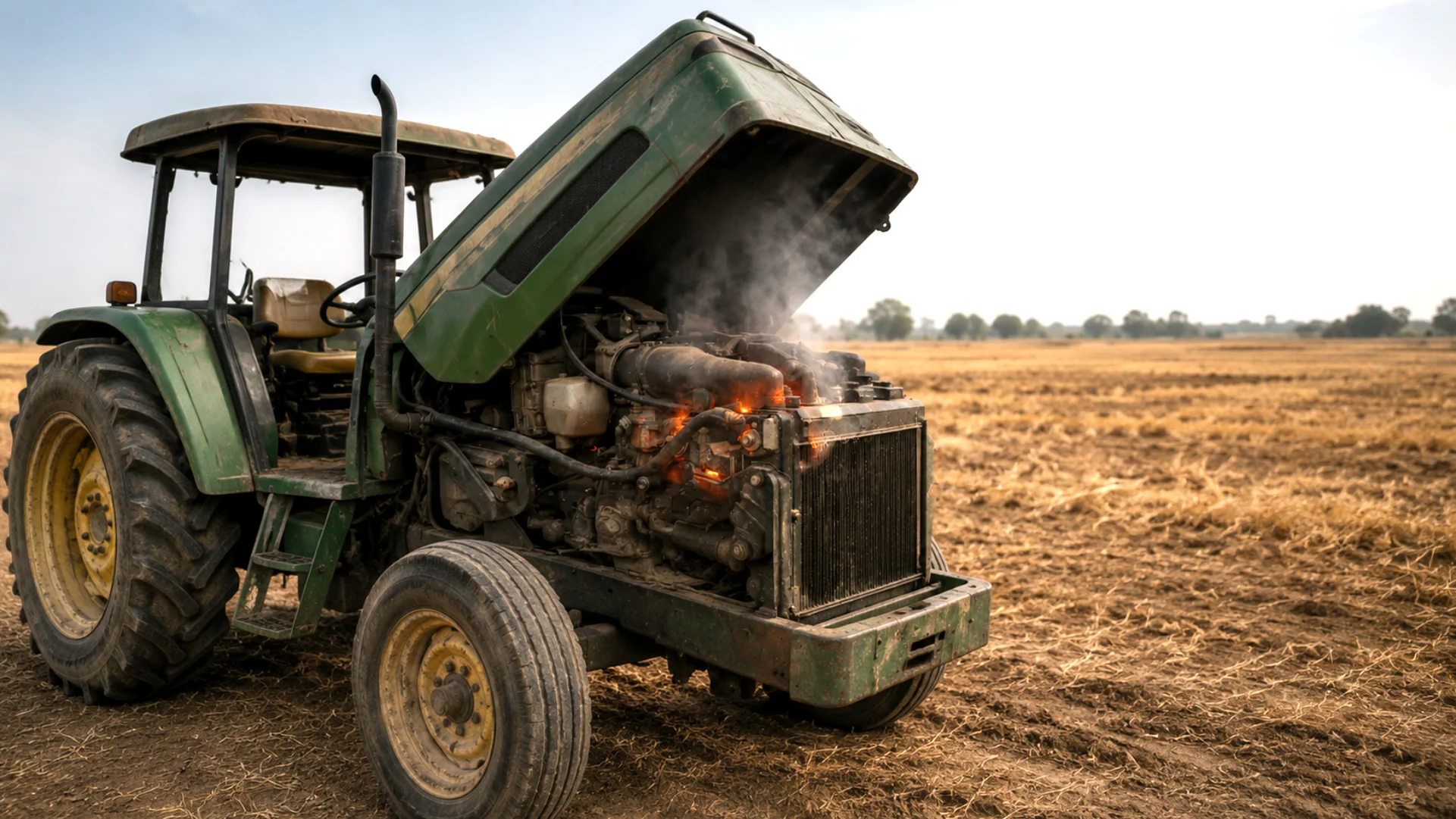
Make sure you use industrial motors for heavy and continuous usage. Industrial motors are built to run steady in an extremely hot environment, yet the machine could still overheat if there is an electrical or mechanical malfunction or outside circumstances. Industrial motor overheating temperatures often can be traced to an overloaded machine, lack of cooling air flow, unbalanced voltage, bearing failure, inadequate lubrication, unaligned shaft, and extreme conditions.
The fact that a motor is hot need not mean it has a fault internally. It is important to bear in mind that the motor, supply, driven equipment, bearings, coupling, shaft, cooling arrangement and plant are all part of a system.
Common industrial motor overheating causes include:
Once you understand this condition, then it becomes a lot easier to spot the appropriate motor overheating solutions rather than the symptoms.
Each motor is chosen for a specific operating load. When driven equipment requires more torque than the motor is designed to deliver, it will be possible for the current to increase and additional heat to generate in the windings. This can happen when production loads fluctuate or driven equipment wears out or provides too much resistance.
Compare load operating current with the rated values by the motor manufacturers and examine the attached appliances for internal resistance. If the load has been permanently increased, consider the size of the motor rather than continuous overload.
Cooling defrosts a clogged or dirty vent openings, a broken fan or insufficient width of the vent openings will increase the temperature due to the lack of cooling. It is very common to clog vents with dust and grease.
Make sure your cooling channels are clear of dirt and gravel and frequently inspect your fan. Also have plenty of space around your motor. Thermal inspection can also reveal how your hotspots have been managed.
Electrical factors should also be considered when making a motor overheating causes. A lot of three-phase motors will generate increased losses and heat when the voltage is very unbalanced. Loose terminal boards, poor connections, or other high-resistance locations can generate heat.
Measure the voltage and current in the phases. Examine the motor terminals and electrical connections. Determine the phase difference in comparison with the motor manufacturer's specifications and investigate this difference before further operation causes damage.
Single phasing is the loss of one phase of a three phase motor supply. This can result in excessive current flow, and localised overheating. A motor can continue to run in certain circumstances which can mask the fault.
In case of abnormal heating or behaviour of a three-phase motor, 3-phase motor is inspected for fuses, contactors, terminals, wires and supply connections. Proper safety procedures should be followed while conducting electrical tests.
Advantages of bearings assist in reducing vibration and support the rotating shaft. As the bearings become worn, cracked or contaminated or are incorrectly installed, friction and vibration will occur. Typical symptoms are:
Check bearing condition, and inspect the temperature, fit, vibration, lubrication. If you are replacing the bearing, ensure you choose the right one that has the rated load the motor can handle, and the environment it is working in.
Lubrication issues are also a prevalent cause of industrial motor overheating. Under-lubrication leads to more drag and friction while over-lubrication also causes heat and drag. Applying the wrong lubricant or applying lubrication on the wrong schedule (relubrication interval) can cause trouble with the bearing.
Lubricants use the recommendation of the motor manufacturer, bearing manufacturer, for use of the lubricant and quantity, considering temperature, speed, load and surrounding.
A motor can run hot even if the power supply is okay. Misalignment shafts or couplings can also cause increase in vibration, increased mechanical loads and bearing loading.
Inspect shaft and coupling alignment at installation and after scheduled maintenance work. Periodically check alignment as a part of troubleshooting any unexpected vibration or recurring bearing problems or developing high temperatures.
This is a very important aspect of equipment in which motors are transferring power via a shaft, coupling, gears or various other transmission parts.
The ambient conditions will have an impact on the ability of a motor to shed heat. A motor is running hot if it's been placed within a room that's poorly ventilated, next to a furnace or boiler or in the vicinity of hot equipment.
Check ambient conditions and ensure enough airflow to the motor. Make sure the motor is appropriate for its application and environment.
Industrial and agricultural equipment may be used in dusty, metal contaminated, moist or other dirt ridden atmospheres. Deposits on the motor can reduce its cooling ability, while ingress of contamination to protected areas can impact on insulation, bearings or electrical end bells.
Ensure fitting enclosure protection, sealing and set up a scheduled inspection and cleaning routine.
A real diagnosis should look for other points besides surface temperature. The goal is to identify if the heat source comes from the electrical supply, motor load, cooling, bearings, alignment, or surroundings.
| What to Check | What It May Indicate |
|---|---|
| Motor current | Possible overload or abnormal electrical condition |
| Phase voltage | Voltage imbalance or supply problem |
| Bearing temperature | Friction, lubrication, or bearing damage |
| Vibration | Bearing, alignment, or mechanical issue |
| Cooling system | Blocked vents, fan problem, or poor airflow |
| Electrical connections | Loose or high-resistance connection |
| Shaft and coupling | Excessive mechanical loading |
| Ambient temperature | Environmental contribution to overheating |
You will be able to see if there are any irregularities in the temperature profile. This can be supplemented with vibration measurements, which can also be very informative. Any measurements should be compared to manufacturer specifications and previous base line measurements.
A three step solution for your electric motor overheating issues:
This method can uncover deeper industrial motor problems which will save costs of needless parts replacements or production downtime.
Maintenance services can help lower the risk of sudden rise in temperatures or plant downtime. Maintenance teams need to:
If the machine is a critical piece of plant, temperature readings can sometimes be an early warning of approaching change.
A motor cannot operate on its own. By transmission elements-bearings, shaft, couplings, gears, and others-the load on the motor is created mechanically. This load can be increased by high friction, malfunctioning elements, misalignment, use of unsuitable replacement parts.
This is why component selection becomes important in solutions aimed at troubleshooting recurring motor overheating causes. Because a motor could be in good condition, but a mechanical component running against it has a high level of friction or vibration.
Blackbird Gears offers agricultural and mechanical machinery parts in such sections as motors, bearing, coupling, shaft and gear as well as in the sections of hydraulic parts, the PTO shafts and other tractor spare parts. Now it's also the website featuring manufacturing and a wide range of machinery part stables.
The symptoms of industrial motor overheating can be electrical, mechanical, or environmental; therefore, selecting a new motor shouldn't be your first conclusion. Power, load, cooling, lubrication, bearings, alignment, and machine working conditions – there are lots of factors to consider before assuming the machine requires a motor replacement.
For machines that utilize driven (transmission) parts, correct gears, shafts, bearings, and couplings are just as critical. Blackbird Gears supplies both agricultural and machinery-part needs through an extensive component selection and manufacturing-driven approach.
Common causes include excessive load, poor ventilation, voltage imbalance, bearing problems, incorrect lubrication, misalignment, and high ambient temperature.
Keep the motor within its rated load, maintain proper airflow, inspect bearings, check electrical connections, and follow recommended lubrication and maintenance practices.
Yes. Blocked vents, dirty cooling surfaces, or damaged fans can restrict heat dissipation and increase the motor's operating temperature.
Check the load, voltage, current, cooling system, bearings, alignment, lubrication, and surrounding temperature to identify the source.
Worn bearings, misaligned couplings, damaged shafts, or unsuitable gears can increase friction and mechanical resistance, causing additional heat.
Yes. Blackbird Gears supplies motors, bearing, coupling, shaft and gear along with other agricultural and mechanical machinery components.